First Paul Krassner, then D.A. Pennebaker, and now Peter Fonda. It's not been a good summer for the 1960s Counterculture, has it? Of course, the three men I mentioned represented different aspects of it. Krassner was instrumental in creating the counterculture, whereas Pennebaker was mostly on the outside looking in. And Fonda? An enthusiastic participant who did his best to remain part of that counterculture long after most people, including his sister Jane, moved on.
The son of one of my favorite Turner Classic Movie actors, Fonda decided to follow in father Hank's footsteps not merely by becoming a thespian but by doing so in the same place his dad (as well as Marlon Brando) got his start, the Omaha Community Playhouse. He eventually moved to Manhattan and Broadway, appearing onstage in the service comedy Blood, Sweat and Stanley Poole, which earned him the New York Drama Critic's Circle Award. From there he went on to Hollywood where guest starred on various TV shows, but got a bigger break when producer Ross Hunter cast him opposite Sandra Dee in the 1963 big screen hillbilly comedy Tammy and the Doctor (one of several movies about a comely backwoods girl variously played by Dee and Debbie Reynolds.) The film was a minor hit though it didn't quite make Fonda a star. But it did get him noticed. Next up was a supporting part in the Carl Foreman-directed World War II drama The Victors, which earned him a Golden Globe. Then came another supporting role in Lilith in which he played a mentally disturbed man who falls in love with a mentally disturbed woman played by Jean Seberg but loses out to a mentally disturbed psychiatrist played by Warren Beatty. After that a starring role in The Young Lovers, about a woman who gets pregnant without first getting married, back when getting pregnant without first getting married was considered something of a novelty. I see no evidence that this movie was even a minor hit, and Fonda's career stalled.
Actually, it may have stalled for reasons other than box office receipts. The aforementioned counterculture was beginning to take hold, and Fonda took a liking to it. He became friends with the mid-1960s folk rock band The Byrds, and through them ended up at a party at house in LA's Benedict Canyon that the Beatles were renting and where LSD, perfectly legal at the time, was the drug of choice. It's hard to say what happened exactly but an acid high George Harrison was worried about dying. An acid high Fonda decided to comfort Harrison by telling him about the time he was 11-years-old and accidentally shot himself in the stomach and almost died. "I know what it's like to be dead," he said. Regardless of whether Harrison was comforted or not, it spooked an acid high John Lennon, who booted Fonda from the party. A short time later he used Fonda's reminiscence as a tagline in his song "She Said She Said," though, as the title indicated, he changed the gender from male to female. Take that for ruining my party!
Fonda's counterculture shenanigans (he was also arrested in the 1966 Sunset Strip riot) must have got him the notice of drive-in movie impresario Roger Corman, one of the first to realize that there's gold in them thar hippies. He cast Fonda as the motorcycle-traveling lead in the B-movie The Wild Angels, which also featured Nancy Sinatra, Bruce Dern, and Diane Ladd. The B-movie ended up making A-movie money, finally making Fonda a star. His next film for Corman was The Trip, screenplay by Jack Nicholson (the same.) Ostensibly an anti-LSD film, acidheads flocked to it in droves, making it another big hit. Among its cast members was an actor who once appeared in a movie with James Dean. No, not Sal Mineo, not even Jim Backus, but Dennis Hopper. Fonda and Hopper, with the help of novelist Terry Southern (Candy, The Magic Christian), decided to write a screenplay together.
The result was Easy Rider. Fonda tried to convince Corman to produced but not direct it, Hopper wanting the latter duty. Corman balked, thinking the neophyte Hopper would fall flat on his ass. I imagine Corman himself fell flat on his ass once saw all the box office receipts he passed up on, but I'm getting ahead of myself. Fonda and Hopper managed to get financing from Columbia Pictures for what eventually became the Citizen Kane of counterculture motorcycle movies. Now I've seen Easy Rider, in which Fonda and Hopper also star (as Captain America and Bucky, though not exactly the way Joe Simon and Jack Kirby had in mind) several times and must say it's a rather uneven film. For those familiar with his writing style, it's obvious what part of the movie Southern wrote: the middle section featuring supporting player Jack Nicholson in a star-making performance. Meanwhile the first section, mostly dealing with a desert commune, and the third section, dealing with a trip to New Orleans during Mardi Gras (featuring then-unknowns Karen Black and Toni Basil as prostitutes) is almost devoid of dialogue! But director Hopper makes up for it with some great imagery, particularly the trippy New Orleans part. The movie today is regarded as a classic, and I think it's a classic. An uneven classic, but a classic. But before it became regarded as a classic it was merely a hit, grossing over $40 million dollars. In today's dollars that would be...a lot.
Film historian Leonard Maltin once wrote that Easy Rider almost destroyed Hollywood when every movie studio in town tried to duplicate its success. I don't know that I'd go that far, but it did almost destroy Dennis Hopper. He was given a lot of money to direct and star in The Last Movie (also starring Fonda), about a violent Western shot in Peru that the natives take a little too seriously. A very experimental film (which big budget mainstream movies rarely are), it won an award at the Venice Film Festival but failed miserably during a two week run in New York City. For the rest of the 1970s, Dennis Hopper was a Hollywood bit player, in every sense of the phrase. Peter Fonda, though, fared much better, starring in (and occasionally directing) many films over the next decade, though I sometimes get the impression that he was offered roles that Burt Reynolds and Steve McQueen had already turned down. His biggest hit during this period was the Allstate Insurance road picture classic, Dirty Mary, Crazy Larry, in which he and Susan George played the title characters (it also featured Adam Roarke, who has almost as much screen time as Fonda and George, but, as he was not a star at the time, got left out of the above-the-title-credits.)
By the 1980s, Fonda was no longer a leading man in movies, but worked steadily nonetheless. he spoofed his own biker image in 1981's The Cannonball's Run. That was a hit. Split Image, in which he played the leader of a cult, should have been a hit but wasn't. He didn't make much of an impact in anything else until 1997's Ulee's Gold in which he indeed played lead as the reticent beekeeping head of a dysfunctional family. His performance (as well as the film as a whole) was highly praised by critics, and earned him an Academy Award nomination as well as a Golden Globe. How did the film do at the box office? Well, I've seen no evidence that it lost money. After that success, Fonda returned mostly to supporting parts, not unusual for an aging actor, no matter how big a star they once were.
Oh, those Fonda kids. I suppose in most people's minds Jane is the more radical of the two, thanks to the time she tried on a North Vietnamese helmet while on a visit to Hanoi, as well as for her 17-marriage to a radical, SDS co-founder and Chicago Seven co-defendant Tom Hayden. However, if you examine her life closely, it seems more a flirtation with the Radical Left that she may have lost interest in once the Radical Left lost its cache. It was Peter that was the true lifelong believer, and holding such a belief while trying to keep afloat in the notoriously choppy waters of show biz could produce some odd juxtapositions. Remember Circus of the Stars? It was a series of TV specials in the 1970s and '80s that featured celebrities performing circus stunts. Peter Fonda appeared twice, first riding--what else?--a motorcycle on a tightrope while former Miss America, substitute Catwoman, and Barnaby Jones costar Lee Meriwether dangled on a swing below. The second appearance he did a magic act in which he sliced up Italian actress Claudia Cardinale. The second time he appeared there was interview with him in the entertainment section of the newspaper promoting the show. In this interview he casually--or at least on the printed page it sounded casual--mentioned due to assaults on the environment he felt the world would come to an end in fifteen years, which would have been around 1993 or so. Or course, that didn't happen (though it could STILL happen, what with climate change and God-knows-what else.) The point, though, isn't whether Fonda was right or wrong, but that he said this in what was basically a puff piece for a cheesy-if-entertaining TV special run during sweeps week. The apocopolypse is upon, but first see what me and Claudia can do!
Here's another odd juxtaposition. During the 1996 presidential campaign, cable channel CNBC ran a series of public service announcements that had celebrities saying what they were do if they were president, and then ending with them saying that they weren't running for president but viewers should go and vote anyway. Wendy's founder said that if were elected, he would make it easier to adopt a child. Growing Pains mom Joanna Kerns said she would try to increase opportunities for young women. Ron Reagan Jr said that if he was elected he would immediately ask for a recount (I wish his father considered that.) Then there's Peter Fonda. What would he do if elected president? Abolish both houses of Congress, fire the federal judiciary, and lock the Supreme Court up in a room and not let them out until they came up with a new, improve Constitution. But, again, he wasn't running for president but you should go out and vote anyway. November came and went without either Bill Clinton or Bob Dole locking up the nine justices.
Peter Fonda had his Vietnamese helmet moment just last year. Upset, as were a lot of people, at President Trump decision to separate parents from their children on the Mexican border, he fired off this controversial tweet:
Barron's older bother struck back:
Fonda eventually apologized.
Now, as much as I may like him as an actor, don't expect me to defend Peter Fonda. He's supposed to be this counterculture hero but then goes tweets something so nasty, so objectionable, so disgusting, so obnoxious, so terrible, so dreadful, so shocking, so appalling, so hideous, so ugly, so vile, so hateful, so horrible, so heinous, so sick, so unconscionable, so creepy, so vulgar, so cruel, so hateful, so reprehensible, and so evil that it might as well come from a member of what these days passes for the Establishment!
Now that I got that out of the way, let's go to the movies:
Filmmaker D.A. Pennebaker was a pioneer in a type of film style known as cinéma vérité (truthful cinema.) Though the term has been used to describe such disparate offerings as the feature films of Robert Altman and John Cassavetes, TV series such as Hill Street Blues and The Office, and even the occasional commercial, it was first and still foremost a style of documentary that emerged in France toward the end of the 1950s and soon caught on in the United States as well. What made cinéma vérité possible was the recent availability of hand-held cameras, which allowed a more intimate, naturalistic look at whatever a film's subject matter. The method also eschewed traditional voice-of-God (or Edward R. Murrow) style of narration, and often didn't even have people talking directly to the camera, all in an effort to make sure the viewer felt they were right there in the room with the film's participants. One thing the viewer didn't see, however, was the hand-held camera actually doing the filming, a detail the documentary's participants may have noticed right away. This has led to the common criticism the people you're watching in the supposedly non-fiction movie may in fact be less than vérité to make themselves to look good on camera. This used to bother me too, until it dawned on me that people often lie through their nonmiked teeth even when there's no camera around. You want total honesty? Sneak into someone's bedroom while they're talking in their sleep.
As for Pennebraker, he got his start as an assistant to Robert Drew, who basically invented the American branch of cinéma vérité with his groundbreaking 1960 documentary Primary, a depiction of the struggle between Hubert Humphrey and the young upstart John F. Kennedy for presidential delegates in Wisconsin. Striking out on his own, Pennebaker chose not politics but rock 'n' roll for his first film: 1967's Don't Look Back, detailing Bob Dylan's 1965 tour of England, as well as the disintegration of his relationship with then-girlfriend Joan Baez, and culminating in the suspense-filled arrival of Scottish singer and supposed folk music rival Donovan, who when he finally arrives looks as though he wished he were in some other documentary. Dylan himself comes across less as the messianic figure that his most ardent admirers imagine him to be and more like a hipster contrarian, which, as a casual fan of the man's music, is fine with me. Ironically the most famous scene in this mostly naturalistic film is one that's decidedly unnaturalistic: Dylan holding up cue cards as "Subterranean Homesick Blues" plays in the background. The success of Don't LookBack established Pennebaker as the leading cinematic chronicler of the 1960s counterculture (though the Maysles brothers were a close second.) Pennebaker and Dylan worked again on a second film titled Eat This Document though the latter eventually took it out of the former's hands. Why? I think he just his frustrations out on Pennebaker. Dylan is pissed-off through most of the film, and with good reason as the former folkie-turned-rocker is continuously heckled by folk purists who apparently spend on a lot of money on concert tickets just to get their betrayal by electric guitar out of their systems. Dylan also chats with John Lennon in the back seat of a car. The normally witty Lennon seems at an uncharacteristic loss for words as ends up playing straight man to an obviously inebriated Dyan. Never commercially released, Eat This Document exists as a bootleg video, and of course can be found on the internet.
Next up for Pennebaker was his next great musical documentary of the decade, 1968's Monterey Pop, considered rock's first big festival as well as a predecessor to Woodstock. Unlike the Don't Look Back, this documentary (or "rockumentary") was a more straightforward concert film. But if you like the music of that era, what a concert! And the crowd is as much of a part of the film as the music being they "ooh" and "ah" each performance. Probably one of the more memorable bits of "oohing and "ahing" comes from Mama Cass during Janis Joplin career-making performance of "Ball and Chain". Then there's Jimi Hendrix, who sets his guitar on fire, a scene that I'm sure has brought many a Hard Rock Cafe franchise owner to tears.
Pennebaker, now the go-to person for rock movies, went on to make films about the aforementioned John Lennon, David Bowie, Alice Cooper, and Depeche Mode. But there were docs on other subjects as well. He agreed to produce fellow documentarian (and later his wife) Chris Hegedus' film Town Bloody Hall about a 1971 debate between Norman Mailer and some notable feminists of the era (when the notable feminists of the era, such as Diane Trilling and Germaine Greer, aren't debating each other.) There were also foray into Broadway with films about Stephen Sondheim and Elaine Stritch, a movie about country music, and his most notable non-rock cinema offering The War Room, in which we see James Carville and George Stephanopoulos successfully plot to make Bill Clinton president (The economy, stupid.)
When motion pictures came into existence around 1890 or so, it wasn't obvious and wouldn't be for another dozen years that fictional storytelling was to be the medium's primary purpose. In the beginning, every movie was a documentary, if you define documentary as something that's basically nonfiction. A motion picture was seen as an extension of photography, not the theater (even as they were being shown in theaters.) People back then assumed it would always be that way. Instead, nonfiction fell by the cinematic wayside, and may have disappeared altogether if not for the efforts of such folks as D.A. Pennebaker. Cultural trends may come and go, but reality will always be with us.
The guy with the beard in the background is beat poet Allen Ginsberg.
Rock, rock, rock! For a change of pace, how about some...
...Sondheim and Stritch?
OK, let's all end this on a non-musical note, though the following clip may make one think of a song anyway. Politically, I'm closer to Bernie Sanders than the Clintons, but can't help but be charmed by this bit of nostalgia:
Ah, life before fascism.Memories light the corners of my mind/Misty water-colored memories of the way we were...
He always said that if he hadn't had an accent, he wouldn't have been typecast in pictures. But if he hadn't had an accent, he wouldn't have become a star by being cast as Dracula!
It's 1971, and seven days is just toooo long to have to wait to hear newly-arrived TV sensations Carrol O'Connor and Jean Stapleton warble "Those Were The Days". What do you do? You go out and buy the 45 single, of course! Then, as long as the phonograph needle holds out, you listen to this somewhat more rollicking version a dozen times a day and maybe finally figure out what they mean by ohgeeouroldlasallerangreat.
Manufactured and marketed by General Motor's Cadillac division from 1927 through 1940.
I am neither for conformity nor nonconformity. I am for individuality. If one's individuality is in effect nonconformity, then so be it. But basically, one's individuality consists of conformity--to one's self.


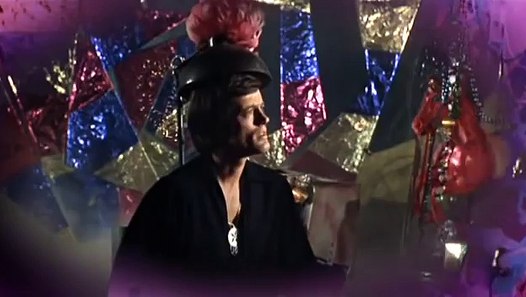


 The result was Easy Rider. Fonda tried to convince Corman to produced but not direct it, Hopper wanting the latter duty. Corman balked, thinking the neophyte Hopper would fall flat on his ass. I imagine Corman himself fell flat on his ass once saw all the box office receipts he passed up on, but I'm getting ahead of myself. Fonda and Hopper managed to get financing from Columbia Pictures for what eventually became the Citizen Kane of counterculture motorcycle movies. Now I've seen Easy Rider, in which Fonda and Hopper also star (as Captain America and Bucky, though not exactly the way Joe Simon and Jack Kirby had in mind) several times and must say it's a rather uneven film. For those familiar with his writing style, it's obvious what part of the movie Southern wrote: the middle section featuring supporting player Jack Nicholson in a star-making performance. Meanwhile the first section, mostly dealing with a desert commune, and the third section, dealing with a trip to New Orleans during Mardi Gras (featuring then-unknowns Karen Black and Toni Basil as prostitutes) is almost devoid of dialogue! But director Hopper makes up for it with some great imagery, particularly the trippy New Orleans part. The movie today is regarded as a classic, and I think it's a classic. An uneven classic, but a classic. But before it became regarded as a classic it was merely a hit, grossing over $40 million dollars. In today's dollars that would be...a lot.
 Film historian Leonard Maltin once wrote that Easy Rider almost destroyed Hollywood when every movie studio in town tried to duplicate its success. I don't know that I'd go that far, but it did almost destroy Dennis Hopper. He was given a lot of money to direct and star in The Last Movie (also starring Fonda), about a violent Western shot in Peru that the natives take a little too seriously. A very experimental film (which big budget mainstream movies rarely are), it won an award at the Venice Film Festival but failed miserably during a two week run in New York City. For the rest of the 1970s, Dennis Hopper was a Hollywood bit player, in every sense of the phrase. Peter Fonda, though, fared much better, starring in (and occasionally directing) many films over the next decade, though I sometimes get the impression that he was offered roles that Burt Reynolds and Steve McQueen had already turned down. His biggest hit during this period was the Allstate Insurance road picture classic, Dirty Mary, Crazy Larry, in which he and Susan George played the title characters (it also featured Adam Roarke, who has almost as much screen time as Fonda and George, but, as he was not a star at the time, got left out of the above-the-title-credits.)


