 |
| 1954-2022 |
*Sigh*. First Neal Adams, now George Pérez. The latter recently deceased comic book artist mentions the former recently deceased comic book artist, and a few other people, in this 2014 clip from one of the many comic book conventions he's attended:
Listen to them cavalierly toss that word "nerd" around. I guess it's a way of "owning" the one-time slur, the same way some blacks use the N-word or the increasing popularity of "queer" among the LGBTQ community. I get it, but when it comes to the graphic arts, I'd prefer to think of such so-called nerds (or geeks) as the comics cognoscenti.

Whether the South Bronx-born-and-raised Pérez was a nerd or a geek, he was first and foremost an artist, and a very good one at that. He got his start at Marvel with a character he co-created will Bill Mantlo called the White Tiger, a superhero who was Hispanic, like Pérez himself. But his star really began to shine in the late 1970s, when he was assigned to draw the more culturally homogenous mutants, androids, mystics and scientific test subjects-gone-awry who comprised the Avengers. Rival DC Comics took note of Pérez's talents and asked him to take over the Teen Titans, a group of adolescent superheroes led by Robin the Boy Wonder and turned that afterthought of a series into a successful seller. Meanwhile, the DC universe was getting a bit too complex, what with Earths-One, Two, Three, Four, etc. A downsizing was called for, and Pérez and former Marvel writer Marv Wolfman (I've always loved that name) destroyed one alternate reality after another in the massive crossover series Crises on Infinite Earths. This all led to a "relaunching" of various DC heroes (the first of several over the years), and Pérez was assigned Wonder Woman, reminding everybody that this was no mere superheroine but a goddess. Treat her with some respect or you might find yourself knotted up in a golden lasso. Like the Titans, that book became more of a success than it ever had been previously. Pérez did a lot of other things in his career but those were the highlights. Mostly a penciller whose work was inked by others, his style varied early on because of that but became more recognizable with time, a realistic elegance applied to the decidedly unrealistic and never particularly elegant world of superheroes. Here's a sampling of his best-known books (along with some com-con cosplay as an added attraction):


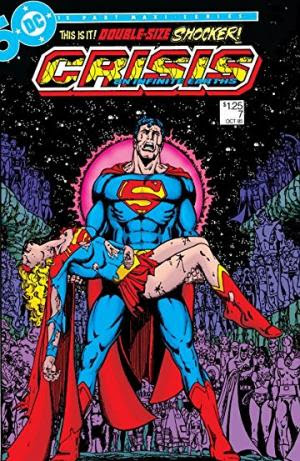


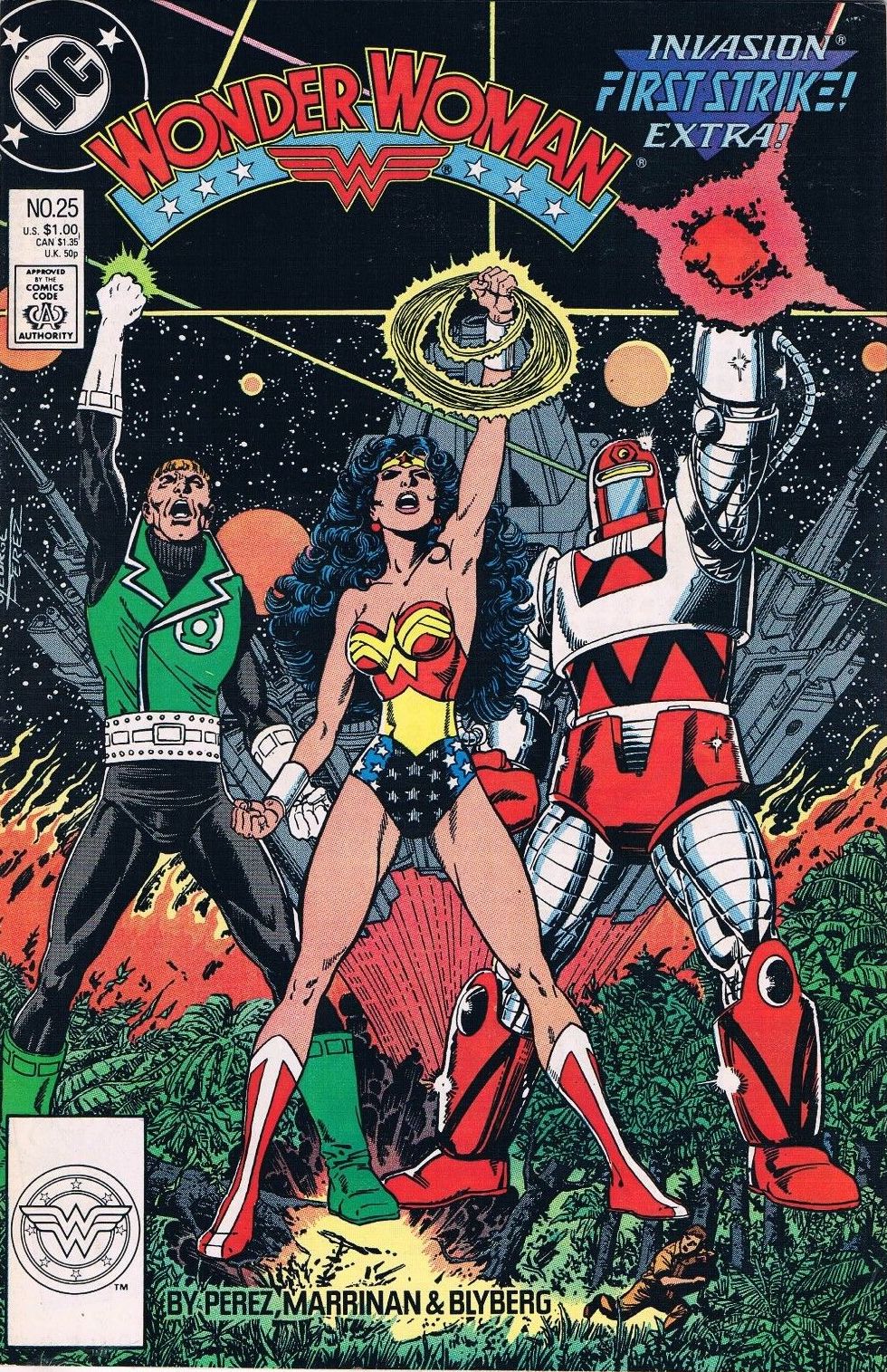

Take the lasso off, Diana, and save it for Justice Alito.
